Visiting Rome for the first time is one of travel's genuinely great experiences — and one of its more easily mismanaged ones. The city contains so much that the temptation is to try to see all of it, which produces a specific kind of exhausted, slightly resentful tourism where you have technically ticked the Colosseum, the Vatican, the Trevi Fountain, and the Pantheon, but experienced none of them properly. The first-timer's guide to Rome is mostly about permission: permission to see fewer things more slowly, to eat lunch without rushing, to sit in a piazza for 20 minutes without feeling like you should be somewhere else. This guide gives you the framework, the specific bookings, the food knowledge, and the common mistake warnings that make a first Rome trip excellent rather than merely completed.
At a Glance
- Ideal first visit length
- 2–4 days (2 days minimum for Colosseum + Vatican zones)
- Must book before travel
- Colosseum (coopculture.it) + Vatican Museums (museivaticani.va)
- Daily pacing rule
- One major anchor morning + one medium anchor afternoon + flexible evening
- Best base area
- Centro Storico for landmark access; Prati for Vatican focus; Monti for Colosseum
- Budget baseline
- €60–120 per person per day including meals and one paid attraction
- Single most important tip
- Book the Colosseum and Vatican before anything else — then plan around them
First-Timer Game Plan: Four Steps Before You Arrive
- Step 1: Book the Colosseum and Vatican Museums timed entries before booking anything else. These two attractions define the shape of your first two days and sell out weeks ahead in peak season. Everything else is planned around them.
- Step 2: Split your days by geographic zone — ancient Rome (Colosseum, Forum, Palatine) on one day, Vatican Rome (Museums, Sistine Chapel, St. Peter's) on another. Never attempt both in a single day.
- Step 3: Identify your dinner neighbourhoods in advance. Trastevere for the first evening, somewhere in the centro for the second. Book Da Enzo al 29 in Trastevere at least a week ahead if you want a seat.
- Step 4: Build one completely unscheduled half-day into your itinerary. Rome rewards wandering more than most cities, and the best first-visit memories are usually from the unplanned hours.
Planning your day in Rome?
Generate a personalized hour-by-hour city plan instantly with the Tempo AI Travel Planner.

What First-Timers Should Prioritise: The Honest List
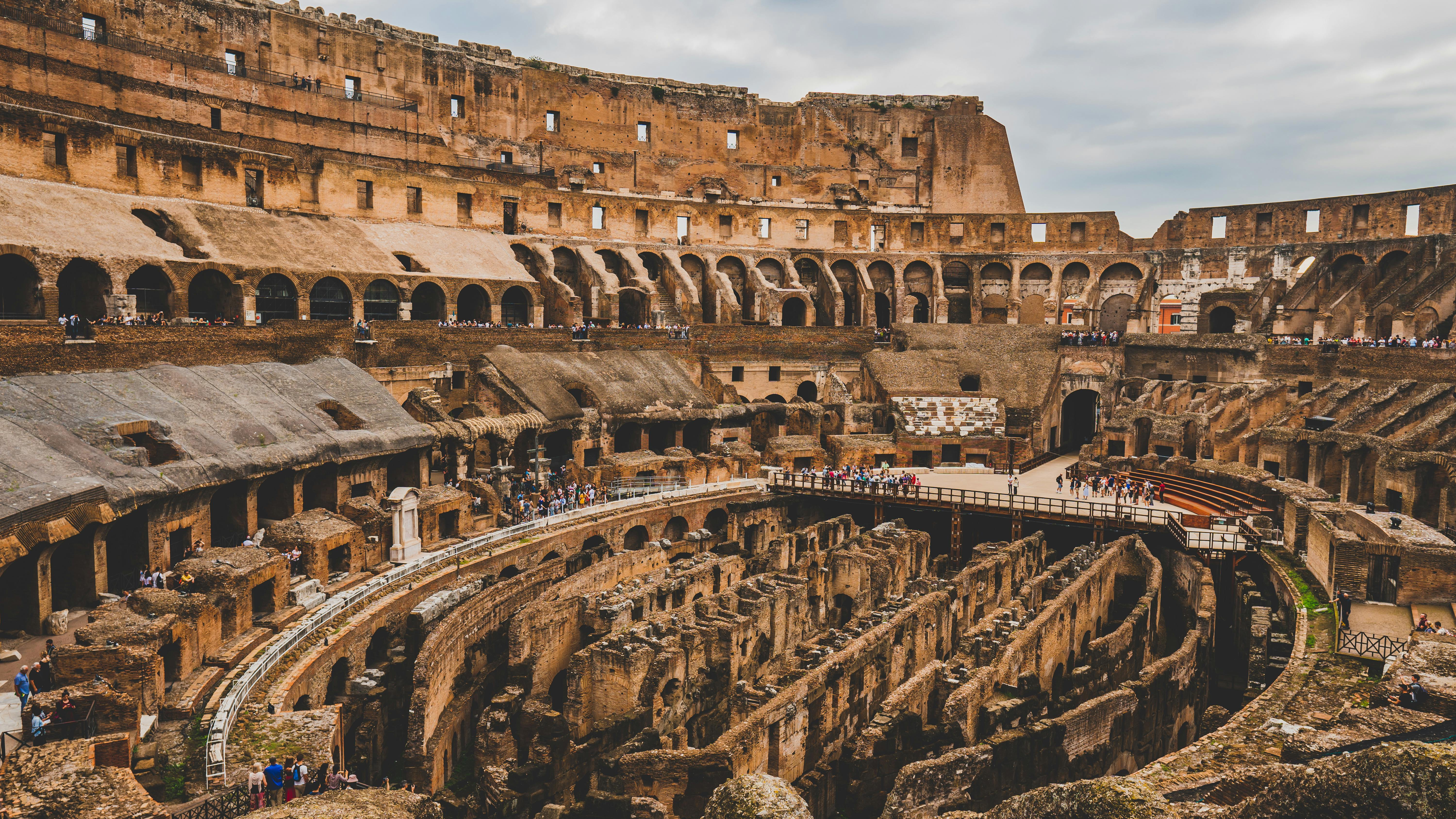
The Rome first-timer list is shorter than you think. There are essentially four non-negotiable experiences: the Colosseum with the Roman Forum and Palatine Hill (one combined ticket, half a day), the Vatican Museums and Sistine Chapel (another half day, minimum), the Pantheon (30–40 minutes, €5), and Trastevere for an evening dinner (free, indefinitely extensible). Everything else — and there is a great deal of everything else — can be added around these four anchors depending on time, energy, and interest.
The Colosseum earns its centrality: completed in 80 AD, capable of holding 50,000–80,000 spectators, the site of gladiatorial contests and animal hunts across four centuries of Roman imperial life. The combined ticket (€18, children under 18 free) includes the Roman Forum and Palatine Hill — three connected sites covering a millennium of Roman history. The Roman Forum is where Roman public life was conducted for centuries; the Arch of Titus at its eastern end shows the looted treasures of Jerusalem being carried in triumph after the destruction of the Temple in 70 AD. Palatine Hill, where the emperors built their palaces above the Forum, has some of the best views over the archaeological zone and is consistently the least crowded section of the complex.
The Vatican Museums (€20+, museivaticani.va) contain 7km of gallery space across five centuries of papal collecting. For first-timers, the essential route moves through the Gallery of Maps, into the Raphael Rooms, and into the Sistine Chapel — Michelangelo's ceiling (1508–1512) and Last Judgment (1536–1541). Exit via the direct door into St. Peter's Basilica, which is free and contains Michelangelo's Pietà and Bernini's bronze baldachin over the papal altar. The dome climb (€8–10) gives the best panoramic view in Rome.
Beyond the big two: the Pantheon (€5, book at pantheonroma.com) is the best-preserved ancient building in the world and worth every one of its five euros. The Borghese Gallery (€15, galleriaborghese.it — always requires advance booking) houses the finest Bernini sculptures in existence and is the most overlooked major museum on a first Rome visit. If you have a third day, book it.
Common First-Timer Mistakes: The Specific Ones
- Attempting the Colosseum and Vatican in the same day. Both require 2.5–3 hours each for a proper visit. Combining them leaves you rushing at both sites and arriving at dinner exhausted. They are on opposite sides of the city. Split them across two mornings.
- Not booking the Colosseum in advance. Walk-up access is unreliable. Queue times for same-day tickets can exceed two hours. Book through coopculture.it weeks ahead in summer — this is the single most important logistical decision of a Rome trip.
- Eating at restaurants on the major piazzas. The restaurants with outdoor tables directly on Piazza Navona, facing the Trevi Fountain, and immediately around the Colosseum charge three to four times local restaurant prices for mediocre food. Walk one full block from any landmark before sitting down to eat.
- Buying bottled water throughout the day. Rome has 2,500+ public drinking fountains called nasoni (little noses) throughout the city, running cold, clean water from Rome's ancient aqueduct system. Carry a refillable bottle and use them.
- Ignoring the dress code for the Vatican and major churches. Covered shoulders and knees are required for entry to St. Peter's Basilica and all significant churches. The Vatican enforces it. Carry a lightweight scarf or shirt to tie around your waist if you are wearing shorts — or be turned away at the entrance.
- Using a hop-on hop-off bus as your main transport. Rome's HOHO buses are poor value and stuck in the same traffic as everything else. The city's historic centre is 7–8km across at its widest and is best experienced on foot, with occasional taxi or metro hops for longer distances.
- Booking a third-party "skip the line" ticket. The official Colosseum tickets from coopculture.it and Vatican tickets from museivaticani.va are the correct tickets. Third-party sellers charge 30–60% premiums for the same timed-entry slots. There is no VIP access that bypasses queuing — there is only a pre-booked time slot, which you can get directly from the official sites.
Tempo can turn this first-timer framework into a personalised hour-by-hour Rome plan in seconds. Try Tempo AI Travel Planner
Suggested First-Timer Day Split
| Day | Core focus | Specific anchor | Evening |
|---|---|---|---|
| Day 1 | Ancient Rome | Colosseum + Roman Forum + Palatine Hill | Trastevere dinner (Da Enzo or Da Augusto) |
| Day 2 | Vatican Rome | Vatican Museums + Sistine Chapel + St. Peter's | Piazza Navona stroll + Pantheon area dinner |
| Day 3 | Personal interest | Borghese Gallery or Monti/Testaccio neighbourhood day | Aperitivo in Monti + dinner near base |
What to Book Before You Land: The Complete Pre-Trip List
Pre-booking in Rome protects your schedule from the single biggest first-timer time drain: standing in queues while your day disappears. Book the following before you travel, in this order of priority.
1. Colosseum timed entry (coopculture.it) — Book 3–4 weeks ahead in June–August; 1–2 weeks is usually sufficient from September to May outside Easter. The €18 combined ticket covers the Colosseum, Roman Forum, and Palatine Hill. Children under 18 are free but still require a booked reservation slot.
2. Vatican Museums timed entry (museivaticani.va) — Book 2–3 weeks ahead in summer; 1 week is often sufficient in winter. Avoid the tour group time slots (10:00–12:00) if the option exists to choose. A 9:00am entry gives you 90 minutes before the main crowd arrives.
3. Galleria Borghese (galleriaborghese.it) — Must be booked regardless of season. The museum operates on two-hour timed sessions with maximum capacity strictly enforced. This is the only Rome museum where showing up without a booking guarantees you cannot enter. Book as soon as your dates are confirmed.
4. Pantheon (pantheonroma.com) — €5, timed entry recommended but often available short notice outside summer. Free on the first Sunday of the month.
5. Da Enzo al 29 dinner reservation (Trastevere) — This is a restaurant booking, not an attraction, but it is equally important. One of Rome's most beloved small trattorias fills up 7–10 days ahead for weekend dinners. Book by email or phone as soon as your Rome dates are set.
Neighbourhood Strategy: Choose by First Morning Stop
Where you base yourself determines how the first hour of every day feels. The correct approach is to identify your most important morning stop on each day and choose accommodation that puts you within a 10-minute walk of it — or at least within a single, simple transit connection.
For a Colosseum-first Day 1: Monti is the ideal base. The neighbourhood is 10 minutes on foot from the Colosseum entrance and has excellent coffee, evening aperitivo culture, and the specific character of a neighbourhood that still functions as a place where people actually live. Via del Boschetto and Via Leonina have good accommodation options at various price points.
For a Vatican-first Day 2: Prati is five minutes from the Vatican Museums entrance. It is the most practical neighbourhood in Rome for Vatican-heavy visits — a clean residential grid with good markets, the best espresso in the area at Sciascia Caffè on Via Fabio Massimo, and none of the tourist premium of the centro storico.
For first-timers who want one central base covering both zones: Centro Storico — the neighbourhood around the Pantheon, Piazza Navona, and Campo de' Fiori — puts you 25 minutes from both the Colosseum and the Vatican by foot or short transit. It has the highest landmark density of any Rome neighbourhood but also the highest hotel prices and tourist concentration.
A Realistic 3-Day Structure for First-Timers
Day 1: Ancient Rome and the Historic Centre
Start at the Colosseum at 8:30am — this is the most important timing decision of your first Rome day. The monument at 8:30am, in morning light, with manageable crowds, is a completely different experience from the Colosseum at 11:30am in full tourist season. Use your pre-booked ticket to enter at opening time, spend 75 minutes inside (focusing on the gladiator story for any children: what happened here, to whom, watched by how many people), then walk through the Roman Forum and up to Palatine Hill. Exit by 12:30pm.
Lunch near the Colosseum is a tourist-trap minefield — walk 15 minutes north into Monti for better food at half the price. The streets around Via del Boschetto have good neighbourhood trattorias serving the Roman canon. After lunch, take the metro or walk toward the centro storico: Pantheon (30–40 minutes, €5), Piazza Navona (free, one of Europe's great Baroque squares), and the streets between them. The Trevi Fountain is 15 minutes east of the Pantheon on foot.
Evening in Trastevere — cross the Tiber at Ponte Sisto (20-minute walk from the centro) for dinner. Da Augusto on Piazza de' Renzi if you did not book ahead (cash only, chalk-board specials, outdoor tables). Da Enzo al 29 on Via dei Vascellari if you booked a week ahead. Both are genuinely excellent.
Day 2: Vatican Rome and the Elegant Centre
Vatican Museums at 9:00am with your pre-booked ticket. The route: Gallery of Maps → Raphael Rooms → Sistine Chapel → direct door to St. Peter's Basilica → dome climb (optional, €8–10, closed in rain). By 12:30pm you should be exiting St. Peter's Square. Walk five minutes into Prati for lunch — Il Sorpasso on Via Properzio for wine and pasta, or any of the mid-range trattorias on Via Cola di Rienzo for a simpler menù del giorno.
Afternoon: Castel Sant'Angelo is a 10-minute walk from the Vatican — the circular fortress built as Emperor Hadrian's mausoleum in 139 AD and converted to a papal fortress is excellent from the outside (the Ponte Sant'Angelo bridge lined with Bernini angels is one of Rome's most beautiful architectural moments) and worth entering if you have time and energy (€15, good views). From there, bus or walk to the centro storico for the afternoon: Piazza Navona, Campo de' Fiori, aperitivo on Via del Governo Vecchio. Dinner in the centro or nearby — Roscioli on Via dei Giubbonari for the best all-around food experience in this zone if you have a reservation; a neighbourhood trattoria south of Campo de' Fiori if not.
Day 3: Depth Over Distance
The best third Rome day is the one that most first-timers do not plan for: a day that is not dominated by queue-heavy landmarks. If you booked the Galleria Borghese (mandatory advance booking at galleriaborghese.it) — go at opening time for the two-hour session, which contains the six finest Bernini sculptures in existence and paintings by Caravaggio, Raphael, and Titian. Then spend the afternoon in Villa Borghese park (free) or walk down through the Pincio terrace to Piazza del Popolo.
If the Borghese is not booked: use Day 3 for neighbourhood depth. Testaccio in the morning — the covered Mercato Testaccio (Tuesday to Saturday), the best supplì in Rome, and an authentic working-class neighbourhood with zero tourist premium on its restaurants. Afternoon in Monti — the wine bars around Piazza della Madonna dei Monti, the antique shops on Via del Boschetto, the specific local energy of a neighbourhood that has not been entirely consumed by tourism.
Rome Food Essentials: What First-Timers Need to Know
Roman cuisine has four canonical pasta dishes that every first-timer should know by name and order at least once. Cacio e pepe: spaghetti with pecorino romano, black pepper, and pasta water — three ingredients, technically demanding to make well, one of Italy's great dishes. Carbonara: guanciale (cured pork cheek), egg yolk, pecorino — no cream anywhere in Rome; if you see cream carbonara on a menu, it is a reliable signal to walk out. Amatriciana: guanciale, San Marzano tomatoes, pecorino. Gricia: guanciale and pecorino without tomato — the oldest of the four and the least known outside the city.
For street food: supplì (fried rice balls stuffed with mozzarella and ragù, €1.50–2 each, sold at pizza al taglio counters) are the essential Roman street food and a correct answer to the "I need food now" problem at any point in the day. Pizza al taglio (by the slice, sold by weight from rectangular trays) is the correct lunch for days when sitting down is not the priority.
For coffee: always order standing at the bar unless you specifically want to sit down and pay three times the price for the privilege. A cappuccino at the bar costs €1.50. Cappuccino is acceptable before noon; ordering it after noon marks you immediately as a tourist, which Romans will never actually say anything about but will notice. After noon, espresso or macchiato.
For gelato: neon colours and gelato piled high in mounds means artificial colouring and excess air. Look for artigianale signs and covered metal containers. Fatamorgana (multiple locations, creative flavours), Giolitti (near the Pantheon, traditional, reliable), and San Crispino (Trevi Fountain area, strict minimalist quality) are all consistent.
Practical First-Timer Tips: The Specific Ones
- Children under 18 are free at all Italian state museums — but need a reservation. Free entry does not mean free access without a booking. Reserve the free children's slots alongside adult tickets at coopculture.it and museivaticani.va. This is the most widely missed budget advantage for families visiting Rome.
- The first Sunday of the month, all Italian state museums are free. Colosseum, Palatine Hill, Capitoline Museums — all free on first Sundays. The trade-off: significantly heavier crowds than a paid weekday visit. Arrive at opening time if visiting on a first Sunday.
- Cash matters in Rome. Many neighbourhood trattorias, market stalls, and smaller bars are cash only or prefer it. Carry €50–80 in cash for the day. Use bank ATMs (Banca Intesa, UniCredit, Banca Popolare) rather than the yellow Euronet machines on tourist streets, which charge high fees.
- Tipping is appreciated but not mandatory. Rounding up or leaving €1–2 per person at the end of a sit-down meal is appreciated. Locals at traditional trattorias often do not tip at all; tourists at tourist-facing restaurants are sometimes presented with service charges that are discretionary rather than mandatory — check the menu or ask.
- The sampietrini cobblestones are beautiful and slippery. Rome's black basalt cobblestones are slick when wet and uneven when dry. Comfortable shoes with grip are not optional — they are the most important packing decision of a Rome trip.
- Official taxis are metered white cars from designated ranks. The taxi rank outside Termini, outside the Vatican, and at the main piazzas has legitimate metered taxis. Unsolicited offers from people saying "taxi?" near tourist sites are not licensed taxis. Use the itTaxi or FREE NOW apps to book official metered taxis from your phone.
Budget Expectations for a First Visit: Real Numbers
A realistic daily budget for a first Rome visit runs €60–120 per person excluding accommodation, depending on meal choices and which attractions you visit. Here is what that breaks down to:
Bar breakfast (cornetto + cappuccino): €3. Morning attraction (Colosseum €18, or Vatican €20+, or Pantheon €5): €5–20. Pizza al taglio lunch: €7–10, or trattoria menù del giorno: €12–15. Afternoon coffee and gelato: €5–7. Dinner at a neighbourhood trattoria: €20–35 per person with wine and water. One taxi ride: €8–15. Total: €55–95 per person per day, with the variation driven almost entirely by dinner choice and attraction selection.
The first Sunday of the month removes the attraction cost entirely. Budget travellers who eat pizza al taglio for lunch and choose a moderate trattoria for dinner can comfortably do Rome on €40–50 per day. Travellers who want a proper sit-down lunch and a better dinner should budget €80–100.
Final First-Timer Checklist
- Book Colosseum timed entry at coopculture.it — do this first, before anything else.
- Book Vatican Museums timed entry at museivaticani.va — do this second.
- Book Galleria Borghese at galleriaborghese.it if you have a third day.
- Make a dinner reservation at Da Enzo al 29 in Trastevere at least a week ahead.
- Pack shoes with grip. Rome's cobblestones are non-negotiable.
- Download the museivaticani.va and coopculture.it confirmation emails offline before travelling.
- Carry a lightweight layer for churches — shoulders and knees covered is enforced at the Vatican.
- Carry a refillable water bottle and use the nasoni fountains throughout the day.
- Limit each day to one major paid attraction. Rome is not a checklist — it is a city.
Rome First-Timer FAQs
Frequently Asked Questions
- How many days do first-timers need in Rome?
- Two days is the minimum to see Rome's two essential zones — ancient Rome (Colosseum, Roman Forum, Palatine Hill) and Vatican Rome (Vatican Museums, Sistine Chapel, St. Peter's) — without rushing either. Three days is the ideal first visit: two major anchor days plus one slower neighbourhood day that turns a checklist trip into a memorable one. Four days allows for the Galleria Borghese, a day trip to Tivoli or Ostia Antica, and the unhurried pace that makes Rome actually enjoyable. If you only have one day, follow the focused one-day Rome itinerary and accept that you are getting a first taste rather than a complete picture.
- What should I book in advance for a first Rome visit?
- Three bookings define your trip: the Colosseum timed entry (coopculture.it — book 3–4 weeks ahead in summer, 1–2 weeks the rest of the year), the Vatican Museums timed entry (museivaticani.va — similar lead times), and the Galleria Borghese if you have a third day (galleriaborghese.it — always requires advance booking regardless of season). The Pantheon (pantheonroma.com, €5) is worth booking ahead in summer but is usually available short notice in autumn and winter. Everything else in Rome is walkable or queue-manageable without pre-booking.
- Where should first-timers stay in Rome?
- The correct base depends on your first morning stop. For a Colosseum-first Day 1: Monti (10 minutes from the Colosseum entrance, excellent local neighbourhood character). For a Vatican-first trip: Prati (5 minutes from the Vatican Museums, calm and practical). For maximum landmark density with one central base: Centro Storico around the Pantheon (25 minutes from both Colosseum and Vatican, highest hotel prices, most "Rome feeling" immediately outside the door). Avoid basing yourself far from your primary morning anchor — the first daily transit shapes everything that follows.
- Can I see the Colosseum and Vatican in one day?
- Technically possible, practically inadvisable. Both the Colosseum complex (Colosseum + Roman Forum + Palatine Hill) and the Vatican (Museums + Sistine Chapel + St. Peter's) require 2.5–3 hours each for a proper visit. They are on opposite sides of the city centre. Combining them in one day means rushing at least one and arriving at dinner exhausted with the two experiences blurred together. Split them across two mornings — this is the single most consistent piece of advice from everyone who has done Rome properly.
- What is the biggest mistake first-time visitors make in Rome?
- Not booking the Colosseum and Vatican in advance, then spending the first morning of their trip in a queue. The second biggest mistake is eating at restaurants directly on or beside the major tourist landmarks — the premium is 40–80% above neighbourhood restaurant prices for equivalent or worse food. Walk one full block from any major landmark before sitting down to eat. The third is attempting too many sights in a single day — Rome is experienced best at a pace that allows you to actually sit in a piazza rather than walk through it on the way to the next item on the list.
- Is Rome expensive for first-time visitors?
- Mid-range by European capital standards — more expensive than Prague or Lisbon, less expensive than London or Paris. A realistic daily budget excluding accommodation is €60–100 per person: bar breakfast (€3), one major attraction (€5–20), pizza al taglio lunch (€8–10), gelato (€3), neighbourhood trattoria dinner with wine (€20–35). Budget travellers who use the first Sunday free museum window, eat pizza al taglio at lunch, and choose a moderate dinner can do Rome well on €40–55 per day. The tourist premium at landmark-adjacent restaurants is real and consistent — avoiding it with the one-block rule saves significant money every day.
Planning your day in Rome?
Generate a personalized hour-by-hour city plan instantly with the Tempo AI Travel Planner.
Related Articles
Rome in 2 Days: The Perfect 48-Hour Itinerary (2026)
Best structure for a short first trip.
GuidesRome on a Budget: A One-Day Itinerary That Still Feels Amazing (2026)
Lower-cost version for first-time travelers.
GuidesRome with Kids: A One-Day Family Itinerary (2026)
Family-focused first-time pacing model.