If you are deciding between summer and winter for Rome, the answer is not just "hot vs cold." The season changes almost everything about how you experience the city: how early you need to start, how long you can comfortably walk, how much queue pressure you face, what kinds of evenings are available to you, how expensive your trip feels, and even what kind of Rome you remember. Summer Rome and winter Rome are genuinely different cities. This guide breaks down the differences with specific temperatures, crowd realities, pricing patterns, and itinerary strategy so you can choose the season that fits your actual travel style — not just the one that sounds better in a brochure.
The honest short version: summer gives you long days, vibrant outdoor life, and maximum city energy — but it demands heat management and crowd strategy that many visitors underestimate. Winter offers lower prices, shorter queues, and easier pacing — but you trade some daylight and the reliable warmth of outdoor evenings. Neither is universally better. The question is which set of trade-offs suits the kind of traveller you are.
At a Glance
- Best months overall
- April–May and September–October (shoulder seasons)
- Best for summer
- Long daylight, outdoor dining, evening energy, open-air events
- Best for winter
- Lower prices, shorter queues, easier pacing, museum-heavy days
- Avoid if possible
- August (Ferragosto closures + peak crowds + maximum heat)
- Budget trend
- Summer 20–40% more expensive for flights and hotels
- Decision rule
- Choose by pacing preference, not temperature preference alone
Summer vs Winter at a Glance
| Factor | Summer in Rome (Jun–Aug) | Winter in Rome (Dec–Feb) |
|---|---|---|
| Temperature range | 25–38°C (77–100°F), high humidity | 7–15°C (45–59°F), occasional rain |
| Crowds at major sites | Peak — Colosseum and Vatican must book weeks ahead | Moderate — often possible to book days ahead |
| Best pacing style | Split-day: early start + midday reset + evening return | Continuous full-day flow with indoor contingency |
| Flights and hotels | 20–40% higher than winter equivalent | Better value outside Christmas/New Year window |
| Daylight hours | Sunset 8:30–9:00pm in June/July | Sunset 4:30–5:00pm in December/January |
| Outdoor evenings | Warm, lively, restaurants spill onto streets | Cool, quieter, indoor dining more prevalent |
| Open-air events | Opera at Terme di Caracalla, outdoor cinema, festivals | Christmas markets, nativity scenes, quieter calendar |
| August specifically | Many local restaurants and shops close for Ferragosto | N/A |
Planning your day in Rome?
Generate a personalized hour-by-hour city plan instantly with the Tempo AI Travel Planner.

Rome in Summer: The Reality Behind the Postcard
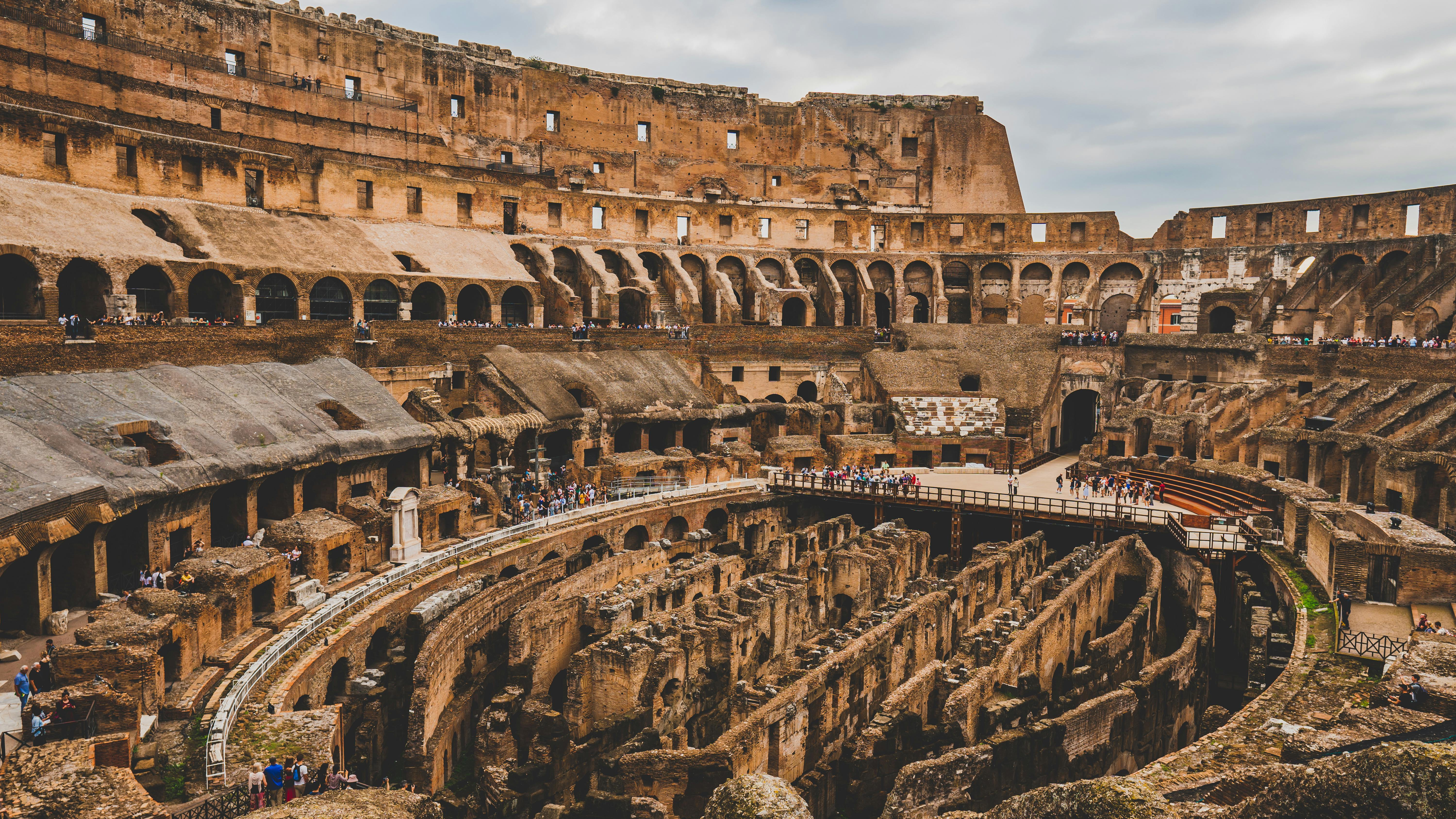
Summer in Rome is the version most first-time visitors imagine: golden light on ancient marble, outdoor tables stretching across candlelit piazzas until midnight, the entire city as a film set for a Roman holiday. That version is real — but it requires understanding what summer in Rome actually means meteorologically, and adjusting your approach accordingly.
June temperatures in Rome average 25–30°C (77–86°F). July and August average 30–35°C (86–95°F) with frequent peaks above 37°C (99°F). The stone and marble surfaces of the city's historic areas absorb and radiate heat, making the street-level temperature feel 3–5°C higher than the thermometer suggests. The UV index in July and August regularly reaches 8–10 (very high to extreme). Standing in direct sun at the Colosseum between 1pm and 4pm in August is not a sightseeing activity — it is a test of endurance that most people fail before reaching the forum exit.
The solution is structural and not heroic: build your summer day around two active windows rather than one continuous marathon. The first window runs from 8:00am to 12:30pm — the most productive sightseeing hours in summer, when temperatures are manageable, major sites are at their least crowded (relatively), and the morning light on Rome's stone is genuinely beautiful. The second window runs from 5:30pm to 10:00pm or later — when the heat breaks, the city reanimates, and the outdoor evening life that makes summer Rome magical actually begins.
The middle hours — roughly 12:30pm to 5:00pm — are best spent in air-conditioned restaurants for a long lunch, in the shade of a museum interior, or at your accommodation. This is not wasted time; it is the thermal management that makes the rest of the day possible and enjoyable. Travelers who adopt this split-day rhythm consistently report better summer Rome experiences than those who try to force an all-day walking marathon in 35°C heat.
August deserves a specific warning. Ferragosto — August 15, Italy's major summer holiday — marks the point at which Roman life temporarily suspends itself. Many family-run restaurants, neighbourhood shops, and small businesses close for two to three weeks around this date. What you are left with is a city occupied almost entirely by tourists and the businesses that serve them, at peak summer prices, in the worst heat of the year. August is the least recommended month to visit Rome unless your schedule is fixed. If it is, apply the split-day strategy rigorously and accept that the authentic local Rome of the neighbourhood trattoria and the regular café will be partially unavailable.
The summer upside, honestly assessed: Rome's outdoor opera season at the Terme di Caracalla (the ancient Roman baths, used as an open-air opera venue each summer) is one of the most memorable cultural experiences the city offers — watching Verdi performed at night in a 3rd-century ruin, with the stars overhead and the ancient walls lit, is specifically a summer experience with no winter equivalent. The long evening light gives photographers a golden window that extends until 9pm. The outdoor piazza life — dinner tables on the cobblestones, aperitivo culture stretching into the warm night — is at its best in June and early July. These are real reasons to choose summer.
Who summer in Rome is best for
- First-time visitors who want the full-energy Rome of the imagination — long evenings, outdoor everything, maximum city vitality.
- Travelers who can commit to early starts (at the Colosseum by 8:30am) and split-day pacing without frustration.
- Anyone whose trip goal includes open-air opera, outdoor cinema, or the specific warm-night atmosphere of a Roman June or early July evening.
- Travelers for whom the long daylight window (sunset at 9pm in June) is a genuine priority — for photography, for evening walks, for late outdoor dining.
Who should think carefully about summer
- Heat-sensitive travellers, families with young children, or anyone with health conditions affected by sustained high temperatures.
- Visitors who prefer to sightsee continuously through the middle of the day without a forced break.
- Budget-focused travellers sensitive to 20–40% peak-season premiums on flights and accommodation.
- Anyone visiting specifically in August — the combination of Ferragosto closures, maximum heat, and tourist-only crowds is the worst version of summer Rome.
Tempo can switch your Rome day to heat-aware pacing: earlier starts, shorter midday walks, and cooler evening blocks. Try Tempo AI Travel Planner
Rome in Winter: The Underrated Season
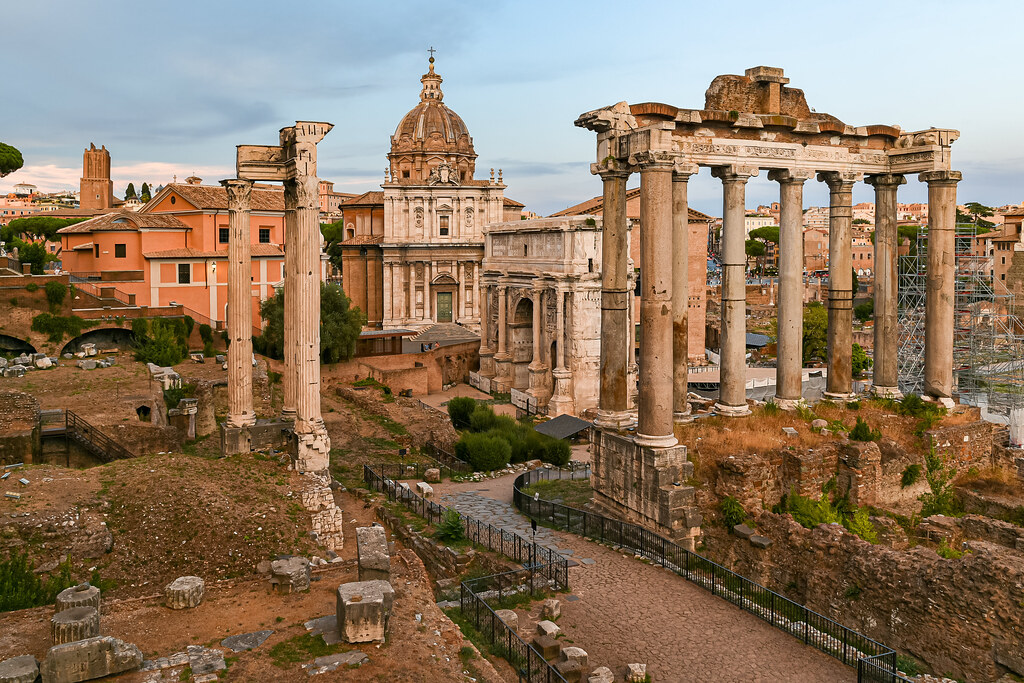
Winter in Rome is consistently underrated in travel content that defaults to the summer postcard image. The reality of December through February in the city is more nuanced and often more appealing than the thumbnail version suggests.
Rome's winter temperatures average 7–15°C (45–59°F) — cold enough to require a proper coat and a layer underneath, warm enough to walk comfortably for hours without the heat management that summer demands. Rome rarely gets genuinely cold in the Northern European sense: snowfall in the city is rare (it happened memorably in 2012 and 2018 and was treated as a citywide spectacle). The weather is predominantly mild, with periodic rain — short, sharp showers rather than the sustained grey drizzle of London or Amsterdam — and frequent clear, bright winter days when the low sun turns the city's ochre facades gold in a way that summer's harsher midday light does not replicate.
The practical advantages of winter Rome are concrete. Queue times at the Colosseum, while still requiring advance booking, are shorter — the 90-minute pre-opening queues that form in July are rare in January. The Vatican Museums in winter are navigable without the sustained crowd pressure of peak season; you can move through the Raphael Rooms and approach the Sistine Chapel without being pressed forward by the mass behind you. Restaurants that require booking weeks ahead in summer often have availability days ahead in January. The city's neighbourhoods — Trastevere, the Prati, the Pigneto — feel more like themselves, used by Romans rather than overwhelmed by visitors.
December has its own specific character. The Christmas season in Rome runs from early December to January 6 (Epiphany, when Italian children traditionally receive their gifts). The city fills with elaborate nativity scenes (presepi) — the Vatican's Piazza San Pietro nativity is the most famous, but neighbourhood churches throughout the city have their own, often centuries-old versions. The Piazza Navona Christmas market runs from early December to January 6, filling the Baroque square with food stalls, craft vendors, and the specific festive chaos of an Italian holiday market. Rome at Christmas is considerably more atmospheric than its reputation suggests.
The winter honest challenge is daylight. Sunset in December and January comes at 4:30–5:00pm — a full four hours earlier than June. This compresses the outdoor sightseeing day and means that sites like the Colosseum exterior and the Castle Sant'Angelo are best visited in the morning before light becomes flat. The upside is that Rome's golden-hour light in winter arrives at a usable time (3:00–4:30pm rather than 8:00–9:00pm), and the city's illuminated evening — its monuments lit against a dark sky rather than a bright one — is genuinely beautiful in a way that the long summer evenings do not provide.
Who winter in Rome is best for
- Value-focused travellers: winter flights and hotels are typically 20–40% cheaper than peak summer equivalents, with January (post-Epiphany) being the best-value window of the year.
- Culture-focused visitors who want museum blocks without the summer crowd pressure — the Borghese Gallery, the Vatican Museums, the Capitoline Museums all breathe more easily in winter.
- Repeat visitors who have already done the outdoor Rome of summer and want to experience the more local, less performative winter city.
- Travellers visiting in December who want the Christmas market and nativity scene experience alongside the standard Roman landmarks.
Who may prefer another season
- Travellers whose primary goal is outdoor evening life — long warm nights on outdoor restaurant terraces are genuinely not available in January.
- Photography-focused visitors who want maximum daylight for outdoor shooting — the compressed winter day limits the outdoor photography window.
- First-time visitors whose Rome image is specifically the warm, sun-drenched version — winter delivers a different but equally valid city, but it requires adjustment of expectations.
Budget Differences: What Actually Changes and by How Much
The budget conversation about Rome seasons is more nuanced than the standard "summer expensive, winter cheap" summary. Here is what actually moves and by how much.
Flights: Summer flights to Rome from major European cities and the US typically carry a 20–40% premium over equivalent winter fares outside the Christmas window. A London-Rome return that costs €80–120 in January often costs €160–250 in July. This is the biggest single budget variable between seasons.
Hotels: Central Rome accommodation in summer (particularly within the historic ring) carries a 25–40% premium over equivalent winter rates. A hotel that costs €120/night in January often runs €180–200/night in July. The exception is August, when despite local departures, tourist demand keeps hotel prices at or near July levels.
Museum admission: No seasonal variation — the Colosseum, Vatican, and state museums charge the same admission year-round. The first Sunday of every month remains free for Italian state museums in winter exactly as in summer (and is equally crowded on those days).
Restaurants: Mid-range restaurant pricing in Rome is relatively stable across seasons. The tourist premium on restaurants immediately around major sites (Colosseum, Trevi Fountain, Vatican) applies year-round, not just in summer. The practical advice — walk one block from any landmark before eating — applies equally in January and July.
The winter exception: Christmas week (December 23–January 2) and New Year's Eve specifically produce pricing that mirrors or exceeds summer peaks for accommodation and flights. January from the 7th onward — post-Epiphany — is genuinely the best-value window of the Roman year: low prices, minimal crowds, and the specific tranquillity of a city that has just exhaled after its holiday season.
Month-by-Month Decision Guide
The summer/winter binary is actually less useful than a month-by-month breakdown. Here is the honest assessment of each two-month window.
January–February: Best value of the year after the first week of January. Very low crowds, comfortable walking temperatures, occasional rain. Short days (sunset 5pm in February). Excellent for museum-heavy trips. Restaurants and local businesses fully operational after Ferragosto-equivalent quiet period.
March–April: Spring shoulder season begins. Temperatures climb to 12–20°C, becoming genuinely pleasant. Easter (dates vary) brings the year's largest single crowd spike to Rome — the papal blessing on Easter Sunday draws hundreds of thousands to St. Peter's Square, and the week around Easter is summer-level crowded. Book everything further ahead if your dates overlap with Easter.
May: Widely regarded as the single best month to visit Rome. Temperatures 18–24°C, long days, manageable crowds, full restaurant and cultural calendar. The azalea display on the Spanish Steps (usually mid-April to mid-May) is one of the most spectacular seasonal events in the city. Book ahead — May's reputation means accommodation fills up.
June: Early summer. Temperatures 25–30°C. Crowds build but have not yet hit peak. The open-air opera season at Terme di Caracalla typically begins in June. Long evenings (sunset after 9pm). The best summer month.
July: Peak summer. Temperatures 30–35°C+ daily. All strategies discussed in the summer section apply with full force. Colosseum tickets need to be booked 3–4 weeks ahead. The city is at its most vibrant and most demanding simultaneously.
August: Ferragosto. Maximum heat, local departures, tourist-only city for much of the month. Many neighbourhood restaurants and shops close for two weeks around August 15. The most difficult month to visit. If your dates are fixed in August, apply split-day pacing rigorously and accept a reduced authentic local experience.
September–October: Many experienced Rome visitors' preferred season. September temperatures average 24–28°C — warm but not brutal. October drops to 15–23°C. Crowds fall noticeably after the summer peak. Prices begin to ease. The autumn light on Rome's stone in October is extraordinary. October is the month that most frequently gets cited as the single best time to visit Rome.
November: Transition month. Temperatures 10–16°C, increased chance of rain, significantly reduced crowds. Not as good value as January/February (those prices have not yet dropped), not as atmospheric as October. A workable month if dates are fixed, but not a first choice.
December: The Christmas season. Unique atmosphere — nativity scenes, Piazza Navona market, Roman holiday decorations. Crowds spike sharply around Christmas week. Early December (the first three weeks) is underrated: Christmas atmosphere without the Christmas week crowds, and prices that have not yet reached the holiday peak.
Itinerary Design by Season: The Practical Framework
The structural difference between a summer and winter Rome itinerary is not which sites you visit — it is when and how you move between them.
Summer structure: 8:00am start mandatory. Major outdoor sites (Colosseum, Roman Forum, Vatican exterior) before noon. Full midday break 12:30–4:30pm (long lunch, museum interior, or accommodation). Resume at 5:00–5:30pm for the afternoon-to-evening wave: neighbourhood walks, piazzas, aperitivo, dinner from 8:30pm onward. The day runs long but with a genuine rest built in. Pre-book everything 3–4 weeks ahead minimum.
Winter structure: 9:00–9:30am start is workable. Continuous day flow with no forced midday break — temperatures allow sustained walking through the afternoon. Front-load outdoor sites in the morning when light is best (before the 3pm golden hour and the 4:30–5pm sunset). Museum visits work well in mid-afternoon when winter daylight becomes flat. Evening is shorter and cooler — plan indoor restaurant dinners rather than outdoor terrace meals. Pre-book key sites but same-week booking is often possible.
Both seasons share the same core booking advice: the Colosseum and Vatican Museums require advance online reservations year-round. Same-day walk-up access is rarely reliable for either. The difference is timing: summer requires 3–4 weeks ahead; winter can often be managed with 3–7 days ahead outside of Christmas week.
The Honest Conclusion
Choose summer if: your image of Rome is the warm, vibrant, outdoor-evening version, you can commit to the early-start split-day structure, you want the open-air opera or the long golden evenings, and you are visiting in June rather than August. Accept the higher prices and the crowd management as the cost of that specific Rome.
Choose winter if: you want lower prices, shorter queues, comfortable walking temperatures, and a more locally occupied city. Accept the compressed daylight and the cooler evenings as the cost of that specific Rome.
Choose May or October if you can. The shoulder seasons combine the advantages of both without most of the disadvantages of either. If your dates are flexible, these are the windows most experienced Rome visitors choose when they have the option.
Rome Season FAQs
Frequently Asked Questions
- Is Rome better in summer or winter?
- Genuinely neither — they are different cities. Summer (especially June and early July) gives you the long-evening, outdoor-life, warm-night Rome of the postcard, but demands heat management and advance booking discipline. Winter (especially January and October) gives you lower prices, shorter queues, and comfortable walking temperatures, but shorter days and cooler evenings. If your dates are flexible, May and October are the months most experienced Rome visitors choose — shoulder season temperatures, manageable crowds, and the full city open and operating.
- Is Rome too hot in summer?
- July and August can be genuinely difficult — daily highs of 33–38°C with reflective heat from the marble and stone surfaces, UV index at 8–10 (very high to extreme), and midday conditions that make sustained outdoor walking uncomfortable for most people. The practical solution is a split-day structure: major sites before noon, a real midday break in air conditioning or shade, and a return to the city from 5:30pm onward for the evening wave. Travelers who attempt to walk continuously from 9am to 7pm in August are choosing the worst experience Rome offers. June is a significantly better summer month — temperatures 25–30°C, still long evenings, manageable crowds.
- Is winter in Rome worth it?
- Yes, unambiguously for the right traveller. January in Rome after Epiphany (January 7 onward) is the best-value window of the entire year: 20–40% cheaper flights and hotels than summer equivalents, very low crowds at major sites (booking 3–7 days ahead is often sufficient rather than 3–4 weeks), comfortable walking temperatures (10–14°C), and a city that feels genuinely inhabited by Romans rather than occupied by tourists. The honest trade-offs are shorter daylight (sunset at 4:30–5:00pm in December/January) and the absence of outdoor warm-evening life. Culture-focused, museum-heavy trips in particular benefit significantly from a winter visit.
- What is the best month to visit Rome?
- May and October are the most consistently recommended months across experienced travellers, travel writers, and Romans themselves. May offers 18–24°C temperatures, the azalea display on the Spanish Steps, full cultural calendar, and the longest days before the summer heat becomes serious. October offers 15–23°C temperatures, the best autumn light of the year, and crowds that drop significantly from the summer peak while the city remains fully operational. Both months require advance booking but with less lead time than July. If forced to choose one: October for the light, May for the energy.
- Should I avoid August in Rome?
- If your schedule allows any flexibility, yes. August combines Rome's worst weather (35°C+ daily, peak UV) with its highest tourist concentration and the significant reduction in local life caused by Ferragosto (August 15), when many family-run restaurants, neighbourhood shops, and small businesses close for two to three weeks. What remains is a city of tourists, tourist-facing businesses, and maximum summer heat — at peak summer prices. June and September deliver a similar weather experience (warm, long days, outdoor life) with meaningfully better local-to-tourist balance and, in September, the beginning of price and crowd relief.
- How far ahead should I book Rome attractions by season?
- Summer (June–August): book the Colosseum and Vatican Museums 3–4 weeks ahead minimum; July and August weekends may require 4–6 weeks. Galleria Borghese always requires advance booking — do this before any other reservation. Easter week requires booking equivalent to July. Winter (November–March, excluding Christmas week): 3–7 days ahead is often sufficient for the Colosseum and Vatican, though a week ahead is safer and costs nothing extra. Christmas week (December 23 – January 2) behaves like peak summer for booking purposes — plan accordingly. May and October fall between these windows: 10–14 days ahead is a reasonable rule of thumb.
Planning your day in Rome?
Generate a personalized hour-by-hour city plan instantly with the Tempo AI Travel Planner.
Related Articles
Rome First-Timer Guide: How to Plan Your First Visit (2026)
Start here if this is your first Rome trip.
ItinerariesRome in 2 Days: The Perfect 48-Hour Itinerary (2026)
Apply seasonal planning to a 48-hour route.
TipsRainy Day Rome: A Perfect Indoor Hour-by-Hour Itinerary (2026)
Weather-proof backup plan for wet days.